251. Blue vase, mustard-colored fabric
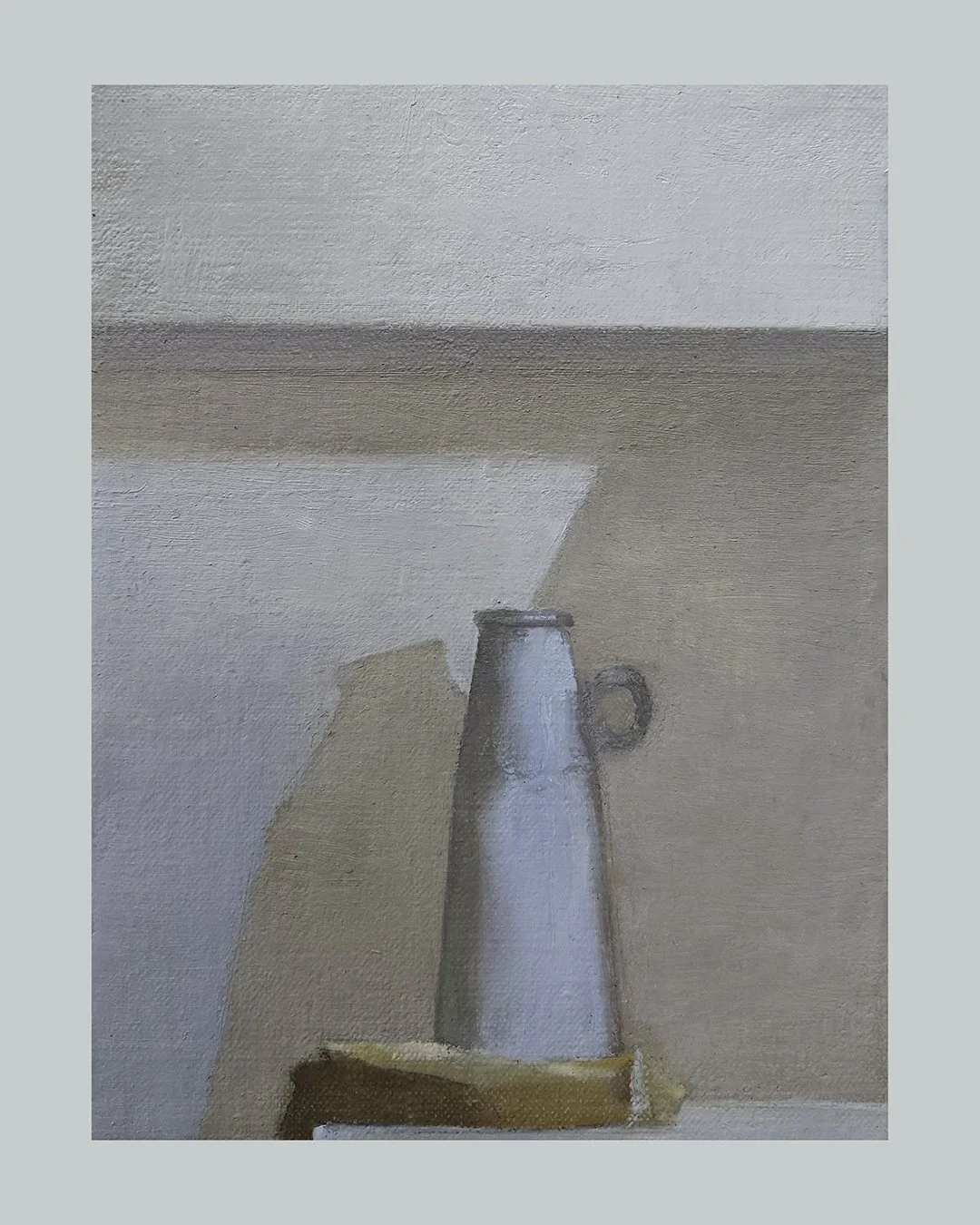
251. Blue vase, mustard-colored fabric (Blaue Vase, senffarbener Stoff), 2026, Öl auf Leinwand, 20 × 15cm, (Darryn Ansted)
In terms of books for grown-ups, I have moved on to Knausgaard’s ‘Morning Star’ series. What a gem. I can highly recommend the audiobook. As with his autobiography there is a lot of misty rambling within it. However, when it congeals to form a critical moment, it really shines. There are also plenty of the familiar profound observations sprinkled throughout. I am relieved. I can’t imagine how difficult it must have been to produce a vast and engrossing piece of fiction after his autobiography. As I was saying to a friend recently, I think the charm of his work is that it just leaves everything of the contemporary world aside in the pursuit of something slowly evolving and essentially personal—but importantly universal. Maybe that is a goal I would also like to have with painting.
However, on the other hand, sometimes when revisiting children’s books as an adult a more clearly discernible theme from daily life emerges. Take the character of Toad from the Wind in the Willows (1908) by Kenneth Graham. Toad brags relentlessly, always distorts the truth and only really wants to amass more wealth and enjoy himself in the moment. Toad is bereft of a deeper reason for being and exists solely for superficial things. Luckily Toad did not escape the book to lead a career in politics. Tyranny would surely have ensued. Good sportsmanship is important. The ‘neighbour principle’ is a pretty common idea from Christianity through Kant’s categorical imperative to British common law. Treat others how you would like to be treated, and so on. It seems almost like a fundamental part of human nature. However, it is lost on old Toad. Maybe Kenneth Graham is telling us how civilization seems to take a winding path, no matter which way you look at it, how contemporary society out there today evolves not unlike the very wind blowing through the willows.