256. Figure after Degas (Figur nach Degas)
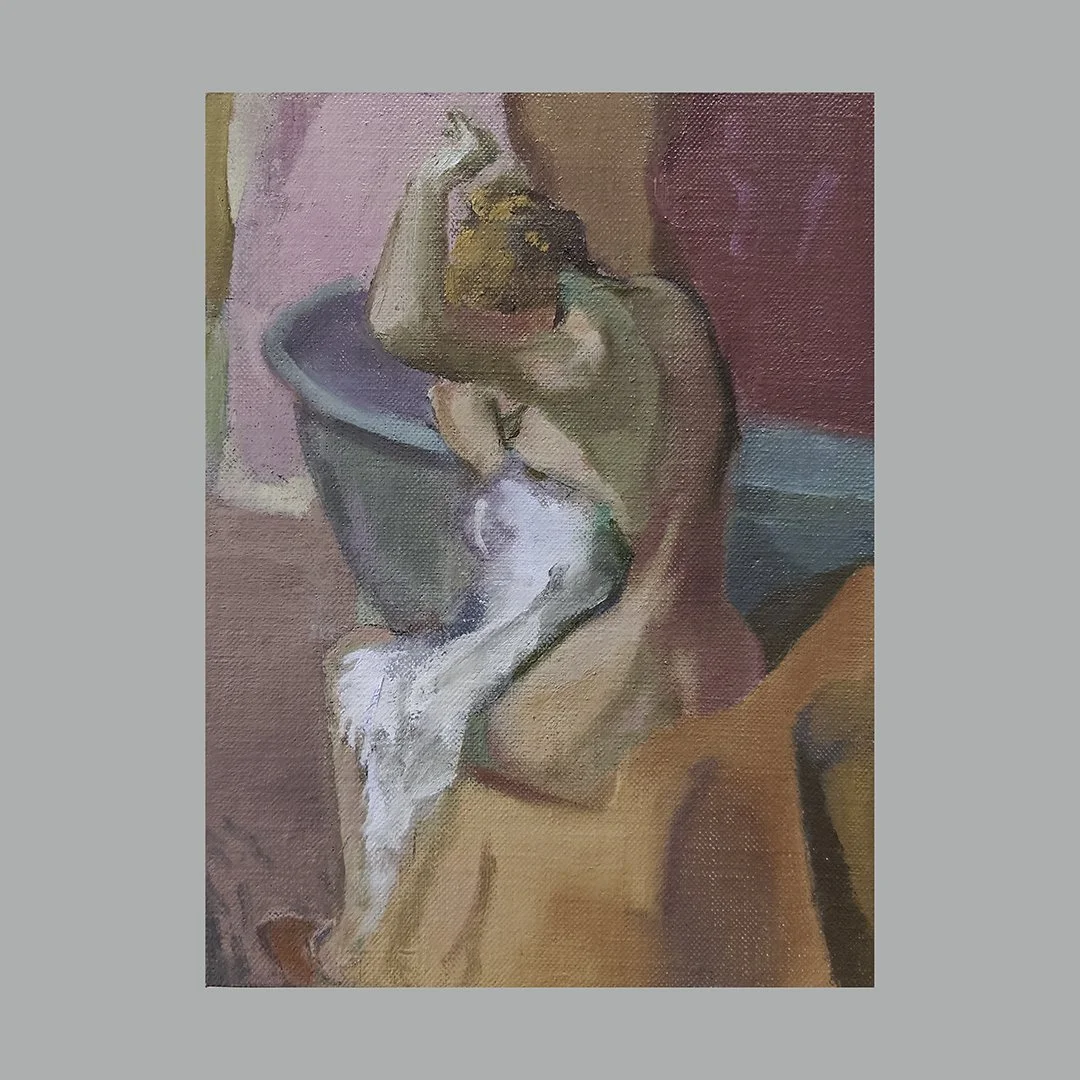
256. Figure after Degas (Figur nach Degas), 2026, Öl auf Leinwand, 20 × 15cm, (Thomas Ansted)
This is a small homage to a pastel drawing by Edgar Degas. While Degas probably executed his drawing in just a few minutes, this took me several hours to paint. It amazes me how he managed to fill every little part of the study with maximum intensity.
Back when I was in art school, copying old masters’ paintings just wasn’t allowed, and instead we were always encouraged to look ahead. So, how is it now that I paint something inspired by Degas as an authentic act? For me, finding a balance between reinterpreting serious painting and creating original work is necessary. I admire artists focusing on the future, like people did in the 1960s. I loved watching ‘The Jetsons’ but the ‘modern’ attitudes from the 1960s-80s of my professors feel a bit dated now.
Painting has always been a craft that grows and evolves over time. In earlier centuries, if someone thought they were the first to paint what they saw, folks considered that a little naive. These days, lots of artists are learning by copying the masters again. It’s happening everywhere. Sometimes, though, focusing only on the past can also be a bit limiting. It’s good to appreciate what came before, but getting stuck in nostalgia can be equally problematic. We can’t just forget what we’ve learned in the modern day.
For example, I can read about how scientists are still exploring gravity and believe it might reveal the nature of the universe. Last week I read that they even suggest gravity could be slipping from our dimension to and from other dimensions—beyond the grasp of time and even light. When I am painting I too feel like I am slipping in and out of other dimensions. For over 500 years artists like Degas produced very inventive work, and I gravitate toward it. I am also grateful to Yuval for bringing this particular study to my attention.