258. Luna (2)
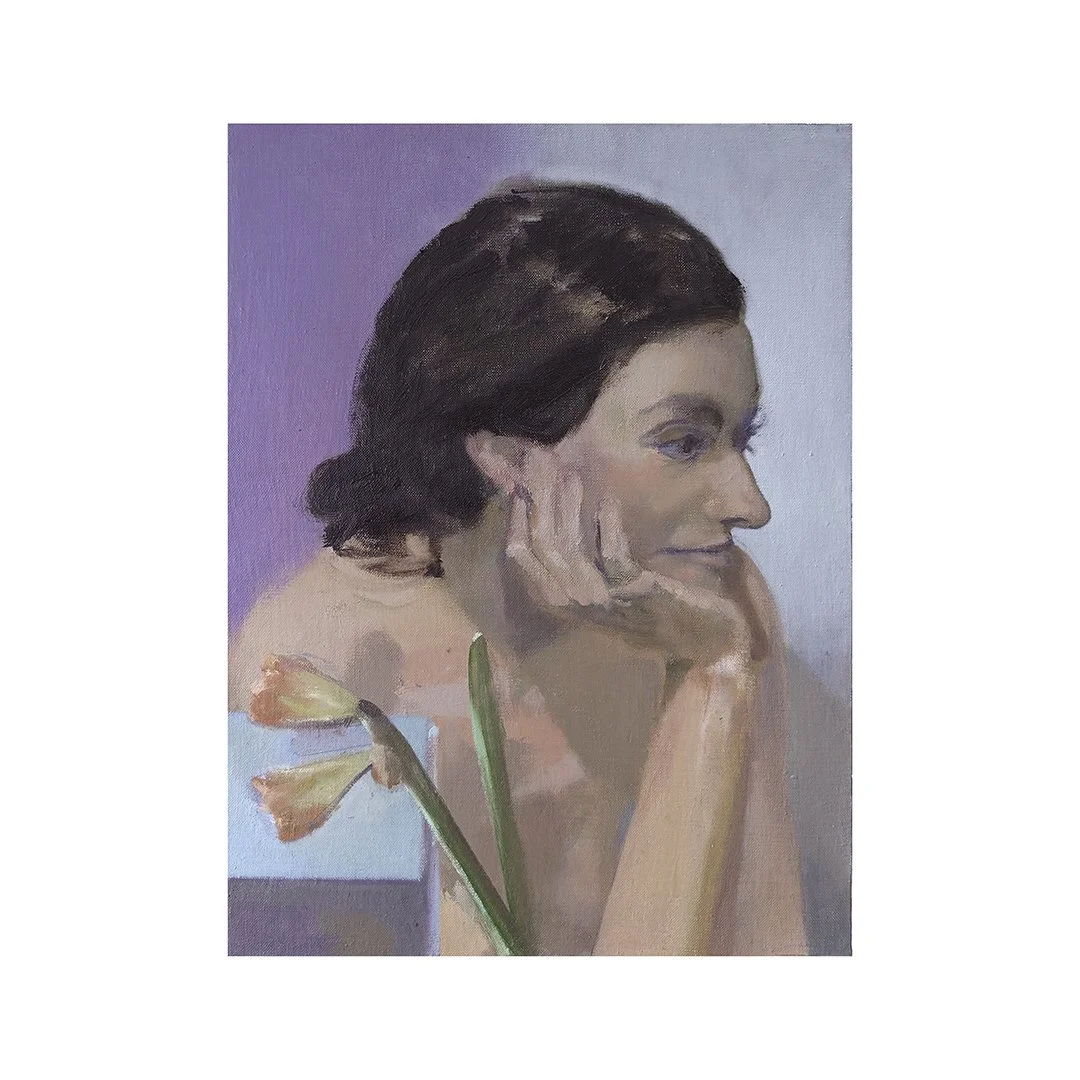
258. Luna (2), 2026, Öl auf Leinwand, 40 × 30cm, (Thomas Ansted)
This is the second painting of the same model in the same pose. Like the first one, it took a few months of on-and-off painting sessions to bring it to a close. Compared to the earlier version, this one wandered a little further away from the original marks, but that wandering also opened up a different kind of atmosphere. It also has some Clivia flowers in it. They had just opened in my studio, and every spring I try to paint them, though I’m almost always too slow. By the time I’m ready, they’ve usually already quietly fallen away. So this time, I simply painted them into the work I already had going.
It took me a little while to get back into the rhythm of the European seasons, but these days I feel back in a familiar routine in our town. Moments like this one the other day have helped: we were sitting in the living room when, through the back window, we saw a pair of roe deer running across the field behind our yard. They were out much earlier than usual. It was evening, and the whole landscape was blushing reddish-gold under the easy sun of a long spring day.
The forest near us has a good number of deer. This is usually the time when the does hide their kids in the tall grass while they go off foraging, and when the bucks scratch the old velvet from their antlers. That leaves scent on the trees, though it can also damage them. Seeing the deer from the window is a reminder of the cycle of the seasons—of a time for shedding the past.
We might be global citizens living through big history, but it’s the small worlds that make up our daily lives. My studio is a bit like the nearby forest. From the outside, it looks chaotic, but it is a place free from strife. It offers another kind of habitat, one that runs counter to the wider terrain of the world. In the last painting, although it had nothing directly to do with current events, it was still shaped by them in indirect ways. Current events become part of the material conditions of making work—whether as something practical, like a delayed flight, or as a reason to want painting to remain a space of respite. Sometimes the marks, more than the image itself, seem to hold the grain of heavier time in a way a flat image cannot.
The habitus around the studio is hard to describe, but it feels worth trying. Paintings gather there. The common thread in my work is that I was present for it. It was either painted or photographed-and-painted by me. There are a few exceptions, but in general the works come together as a diary-like view of my life. Even so, they are not a photorealistic record but more like a residue of everything that was happening around that particular run across the field.