271. Still life after Morandi (Stillleben nach Morandi) 2
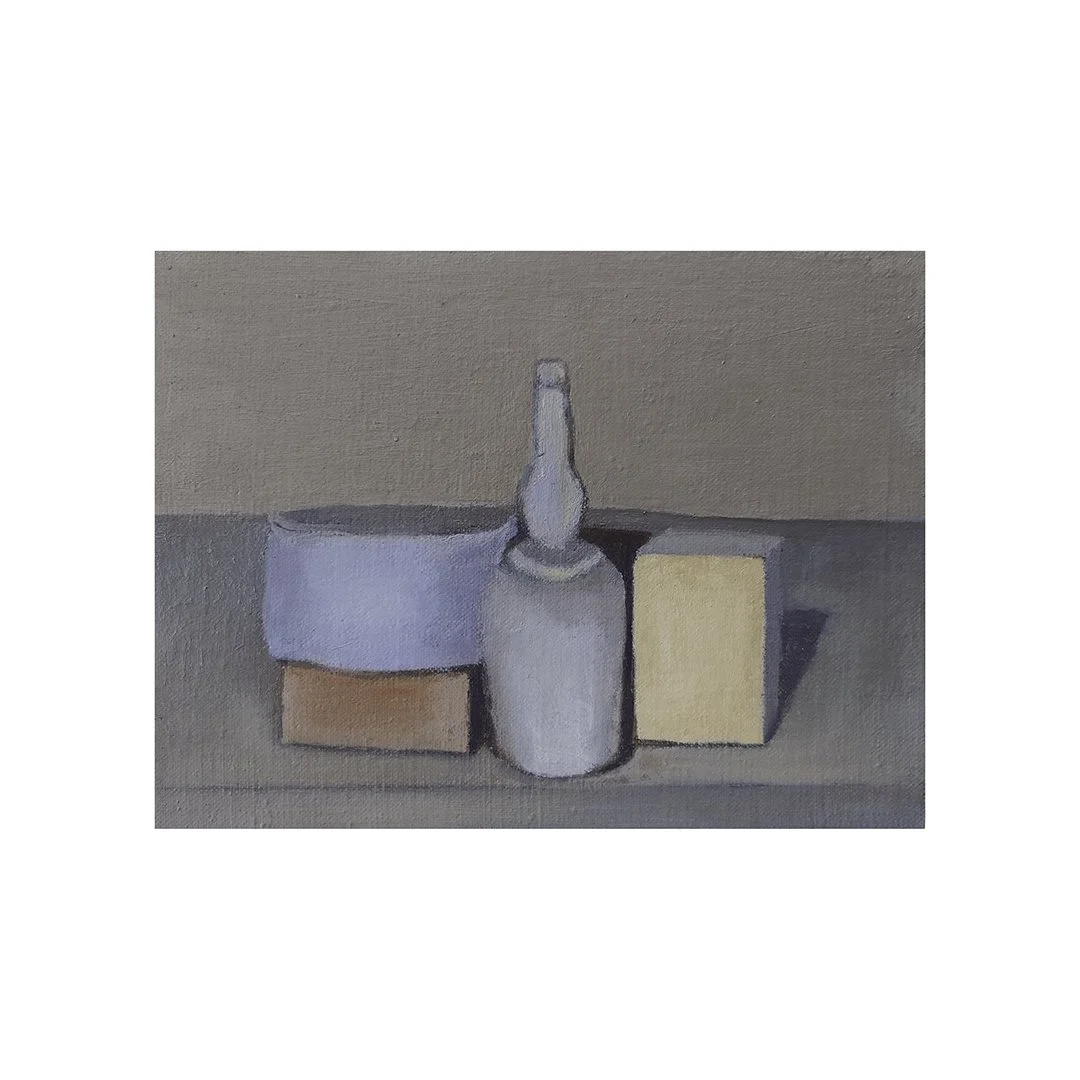
271. Still life after Morandi (Stillleben nach Morandi) 2, 2026, Öl auf Leinwand, 15 × 20cm
The exhibition is just around the corner and I think about old Dr Who episodes. At first they look a little clunky. Then, little by little, you realize that once inside, the space has become bigger than it looked at first, and then before you know it, you are traveling through time.
This is my second little transcription from Morandi. It has been interesting to do a few transcriptions. I was always too distracted in my foolhardy youth to do transcriptions but these days I enjoy not-worrying about the composition, which has already been mostly worked out by the artist of the original. For me it is mainly a learning process and it is very humbling. Painting in general can rebut you but doing a transcription really makes sure to stamp out any last fire of confidence that might have been kindling.
There are still decisions to be made about composition in a transcription. The originals are artworks, which are ‘prototypical’ and so it is unreasonable to expect that they are ‘flawless’ like the execution of a computer program. In a transcription, the second, or millionth, time around all the ‘two-steps forward one step-backward’ of the original is ironed out into a methodical forward march, unrelenting, and without the stress and agony of the original creator.
In the 2008 film Pontypool, the zombie virus travels through words, even infecting people that are listening to a radio station broadcast. It amazes me that this film, adapted from a play could basically predict social media exactly at the moment of its creation, as it suggests not that ‘the medium is the message’ but rather that the medium is the ultimate end point of authentic meaning. However, it is also a timeless observation, that words are very malleable, and never is that more true than today. But drawing is something else. Drawing remains very human by contrast. Its space somehow becomes bigger in the backs of our eyes, at least for the viewer who is ‘thumbing a ride’ in front of an artwork. Of course, it is passed over by most people, and I am also on autopilot myself most of the time too. Nonetheless, I hope this exhibition lands somewhere that people are wanting to hitchhike through time and space. In which case, get in, and let’s see what this thing can do. Or, indeed, are these words too also infected by this medium? This is not a telephone box.