260. Onion (Zwiebel)
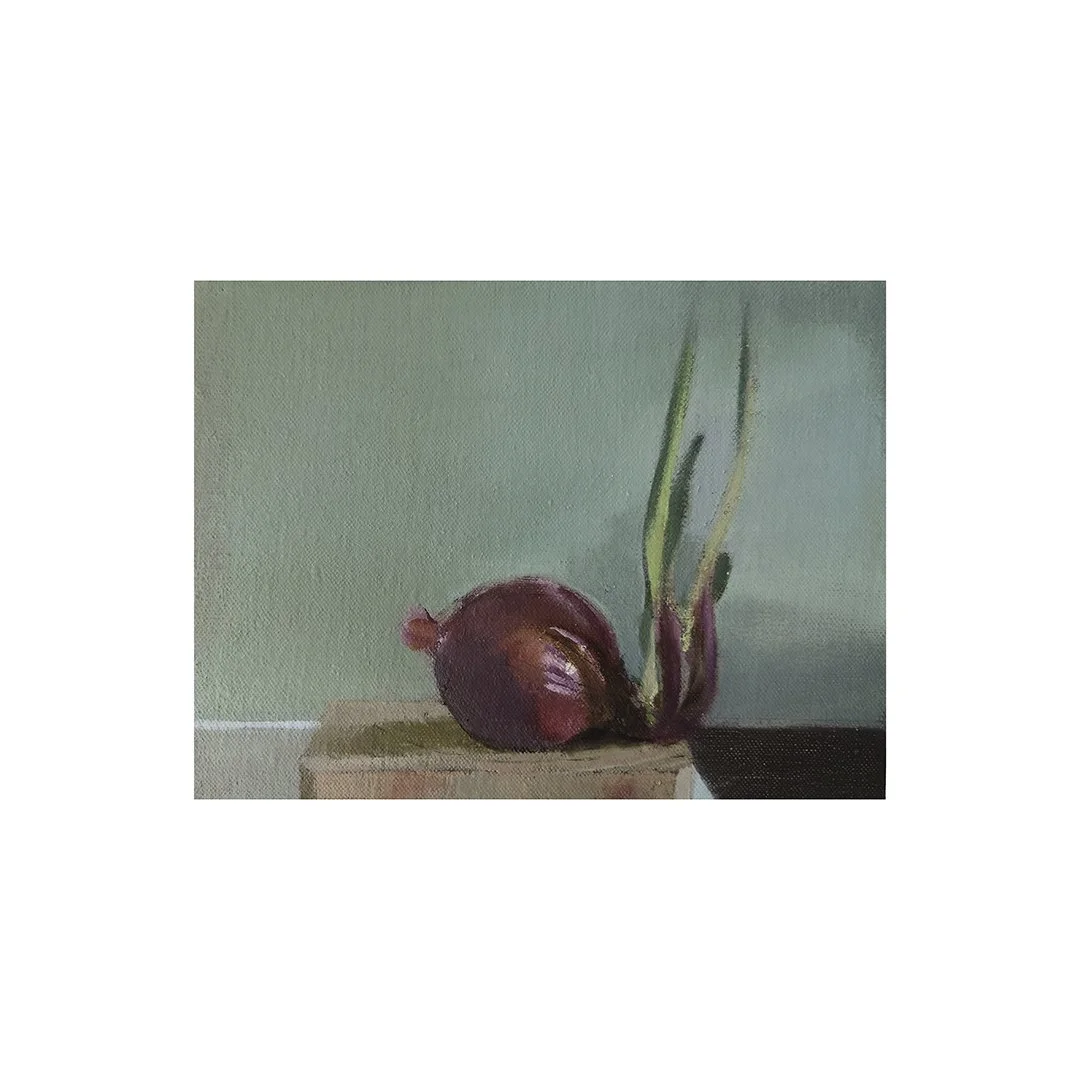
260. Onion (Zwiebel), 2026, Öl auf Leinwand, 20 × 15cm, (Thomas Ansted)
I took a Spanish onion from our kitchen and brought it to class. I put it down in front of my class to paint, showing them the onion in the early work of Velazquez. He painted several Spanish-kitchen scene paintings in the early 1600s that are just sublime. The tactility and drama in those quasi-apprentice pieces are both intimidating and instructive to anyone attempting to paint still life. In any case, time passed and we went to Australia for a holiday. When I returned from Perth to my studio in Geseke, I saw that the onion I left out had burst into new life with bright green stalks. This seemed to be the right thing, growing.
At 6am in the morning the other day, a young deer looked into the living room window of our neighbors. And this is not uncommon. Indeed, I am starting to understand how artists leaning on forest motifs were so well received by German audiences. Joseph Beuys and Anselm Kiefer (even the word Kiefer is also a variety of tree) have used forest motifs ad nauseaum, to great acclaim. They both emphasize the Wald as a site of rebirth. Now that I think about it, I just realized that I painted an illustration of a deer myself a couple of years ago. I painted a book, specifically, a page from Grimm’s Fairy Tales. Brother and Sister (Brüderchen und Schwesterchen) is the story of a boy that gets turned into a deer. I guess after a while the deer seeps into your consciousness undetected. They have to be ghostly but nonetheless the renewal of life announces itself, even stares you in the face sometimes. As I said, I think I can come to grips with things with this kind of art practice because the making of it brings things together, somehow.