262. Asparagus (Spargel)
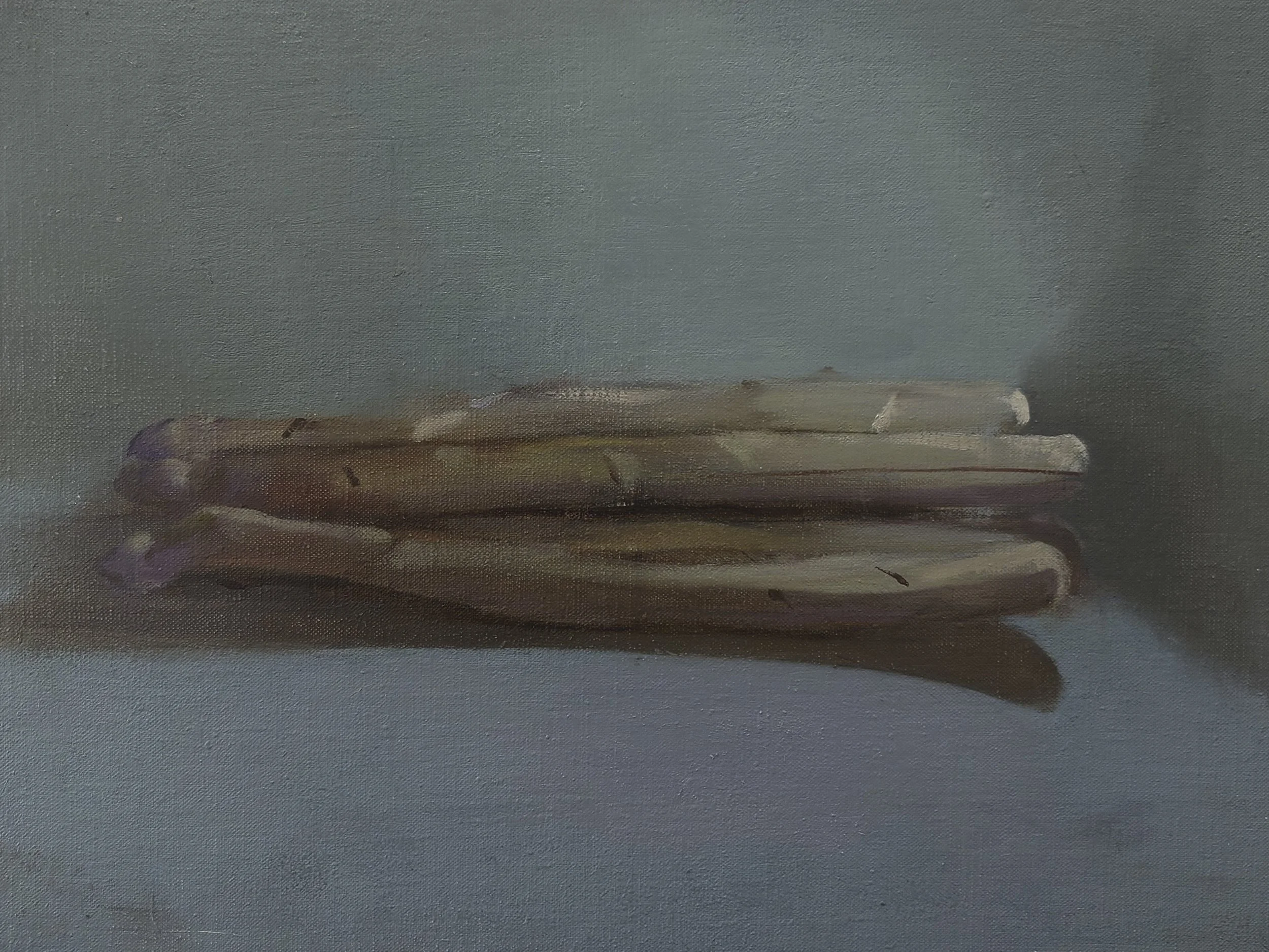
262. Asparagus (Spargel), 2026, Öl auf Leinwand, 30 × 40cm
Much like the deer that have been wandering in from the horizon and into my paintings, asparagus has somehow started wandering into my thoughts too. I know there are brilliant paintings of asparagus in art history, but I am not really chasing that kind of brilliance. So what am I after? Mostly, I think, I wanted to stay close to the present moment. I went to the marketplace around the corner from my studio, bought a bundle of the famous white asparagus, and brought it back to paint, a bit like a chef choosing whatever is fresh and in season for dinner. It felt less like a conversation with art history and more like a way of paying attention to what was right in front of me. And, as it turns out, asparagus is a surprisingly lovely thing to paint. It is also a gentle contrast to everything else going on in the world.
Modern life often seems to resemble Dada art: fragmented, noisy, full of strange juxtapositions. I am trying to do something a little different, though to explain that, it helps to spend a moment with Dada first. Dada began as a reaction against fine art and, rather ironically, became one of the first radical art movements to be embraced in the twentieth century. Benjamin Buchloh has suggested that we are still living in Dada’s shadow because so much of our visual culture comes from it: collage, the monochrome, the readymade, and assemblage. I think he has a point. Dada helped shape the world we look at every day. The Instagram feed can feel like a kind of endless collage. The readymade turns up whenever a headline announces that a banana has sold for an absurd sum, or that a cleaner has mistaken a work of modern art for rubbish and thrown it away. The monochrome is a little harder to spot, but if you stretch the idea to include the Bauhaus school, you start seeing it everywhere: in the use of primary colors on packaging, labels, bus shelters, and all the clean surfaces of daily life. Collage is trickier to find, but if we include Dada film and the jump cut, then every quick edit on a screen carries a bit of that legacy. In that sense, Dada still hums along underneath modern visual culture.
Returning to representation, on the other hand, feels like a simpler and more human desire. New Objectivity has interested me for a long time, even though I have never found it especially seductive. Perhaps because it is not seductive it is interesting. I like what it offers: a cooler, calmer kind of painting, one that balances the ecstatic, hot, and “wild” modes of expressionism without getting lost in the Dada wilderness, where signs can slip away from meaning altogether.